
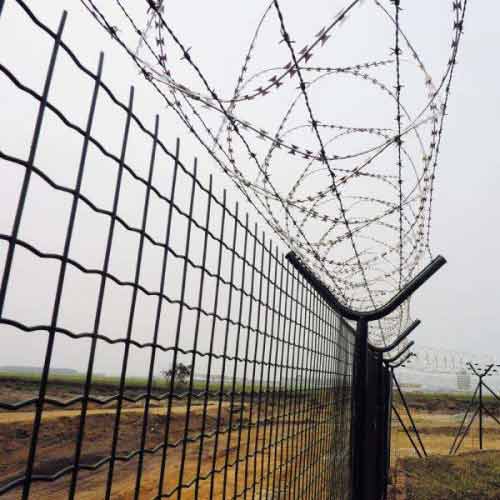
Barbed wire fences are typically made of steel wire with various protective coatings, with the specific material determining corrosion resistance, strength, and suitability for particular applications. The combination of line wire, point wire, and barbs creates effective livestock barriers through the interlocking of multiple wire components. Understanding barbed wire material compositions helps agricultural operators select appropriate products for specific environmental conditions and containment requirements.
Carbon Steel Wire Compositions
Standard barbed wire utilizes low-carbon steel containing approximately 0.06-0.25% carbon, providing adequate strength while maintaining formability for barb formation and wire drawing. Higher carbon content in high-tensile barbed wire increases strength, allowing longer spans between posts and reduced sagging under load conditions. The carbon percentage directly influences wire hardness, durability, and the sharpness retention of formed barbs. Quality barbed wire specifies carbon content ranges ensuring consistent performance across manufacturing batches.
Galvanized Coating Specifications
Hot-dip galvanizing applies zinc coating to barbed wire through immersion in molten zinc, providing cathodic corrosion protection for underlying steel. Coating weight measured in ounces per square foot determines corrosion resistance level, with heavier coatings providing longer service life in corrosive environments. Class 3 galvanizing with 2.0 ounces per square foot provides enhanced protection compared to standard Class 1 coatings at 0.85 ounces per square foot. The zinc coating sacrifices itself to protect steel when corrosion attacks penetrate to base metal.
Zinc-Aluminum Alloy Coatings
Zinc-aluminum alloy coatings (formerly called galfan) combine zinc with 5% aluminum, providing superior corrosion resistance compared to standard galvanizing. The aluminum content creates protective oxide layers that regenerate when damaged, providing self-healing corrosion protection. These coatings extend barbed wire service life in coastal and industrial environments where standard galvanizing degrades rapidly. The alloy coating maintains barb sharpness better than pure zinc coatings in extended service conditions.
PVC and Polymer Coatings
Polyvinyl chloride (PVC) coatings extrude over galvanized wire, adding physical barrier protection and color options for specialized applications. The coating prevents direct contact between corrosive elements and galvanized steel, extending fence life in demanding environments. PVC coating thickness and adhesion quality affect long-term performance, with thin or poorly adhered coatings chipping and peeling prematurely. Agricultural PVC-coated barbed wire typically features barbed sections with exposed points for animal deterrence while protecting line wire.
Barb Wire Construction and Materials
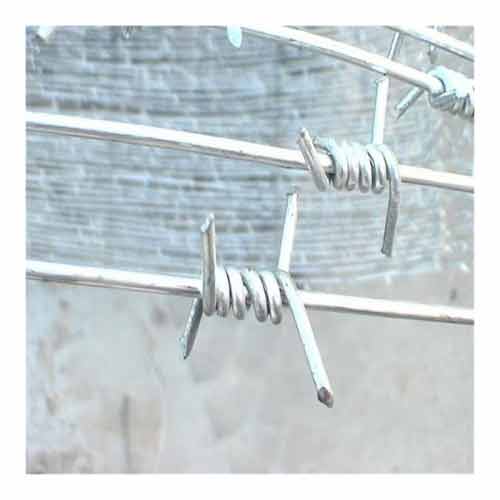
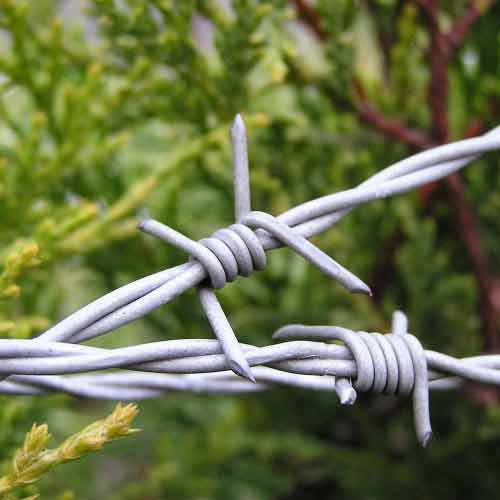
Barbed wire points form from short wire segments twisted around line wires, with point sharpness determined by wire gauge and twisting configuration. Two-point and four-point barb configurations provide varying deterrence levels, with more points increasing animal contact with sharp elements. Point wire gauge affects sharpness retention, with lighter gauges creating sharper initial points that dull more rapidly under use. Quality barbed wire maintains consistent point formation without weak spots that might bend or break prematurely.
Tensile Strength Variations
Standard barbed wire with tensile strength of 950-1,200 psi provides flexibility for handling and installation while maintaining adequate barrier strength. High-tensile barbed wire reaching 1,500-1,800 psi allows increased spans between posts and reduced maintenance from sagging. The higher strength requires stronger posts and tighter bracing to support increased wire tension without infrastructure failure. Tension curve characteristics determine how wire performs under variable loads, with some products designed for specific agricultural conditions.
Conclusion
Barbed wire is typically made of carbon steel with galvanized, zinc-aluminum, or PVC coatings. Material selection depends on environmental conditions, livestock type, and required service life.
Contact our team for barbed wire specifications appropriate for your agricultural containment requirements.
FAQ
Q1: What type of steel is used in barbed wire?
A1: Barbed wire uses low-carbon steel typically containing 0.06-0.25% carbon, with higher carbon content in high-tensile varieties.
Q2: Does barbed wire come in different coatings?
A2: Yes, barbed wire comes with hot-dip galvanizing, zinc-aluminum alloy coatings, and PVC coatings, each offering different corrosion resistance levels.
Q3: How long does barbed wire last?
A3: Properly specified barbed wire lasts 15-30 years depending on coating weight and environmental conditions, with heavier coatings in coastal areas extending service life.
Q4: What do two-point and four-point barbs mean?
A4: Two-point and four-point configurations refer to the number of barb points per twist, with four-point designs providing greater animal deterrence through increased contact points.
Q5: Can barbed wire be used for cattle and sheep?
A5: Yes, barbed wire works for both cattle and sheep containment, with sheep typically requiring closer wire spacing to prevent passage through larger openings.
-
2026-05-03For enclosing large areas quickly or establishing temporary perimeters, the Fence Roll offers a convenient alternative to panel-by-panel fencing. Made from interwoven wire or mesh mounted on a flexible backing, it can be unrolled along the ground and affixed to posts or stakes to form a co
-
2026-05-02A long barbed wire fence should be tensioned to a "firm" state, often described as having the tension of a bass guitar string, rather than being pulled "guitar-tight." Over-tightening is a common error that can lead to wire breakage, especially during temperature drops
-
2026-04-30Wire fence serves as a broad category of affordable, practical barriers used to define space, provide security, and contain animals. Its fundamental principle involves using strands or grids of metal wire, typically steel, to create a physical limit. This category includes everything from