

Barbed wire is a cost-effective barrier for livestock and security. The quality control process centers on the tensile strength of the line wire and the hardness of the barbs. The line wire (the two strands running parallel) must be high-tensile steel to resist stretching. QC inspectors test the wire to ensure it can be pulled tight over long distances without snapping. The barbs are made from a harder, high-carbon steel wire to ensure they remain sharp and do not bend easily when touched by an animal. The sharpness of the points is visually and mechanically inspected; dull points defeat the purpose of the fence.
Twist and Spacing Uniformity
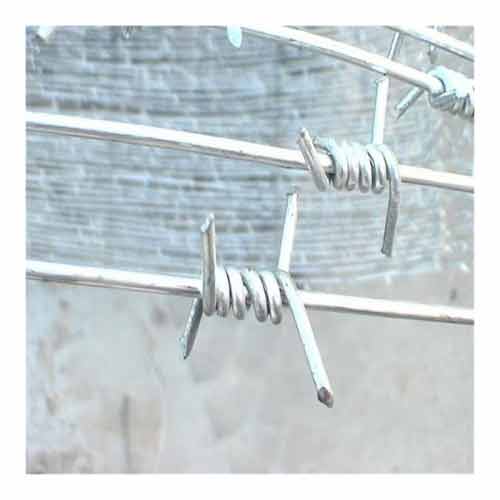
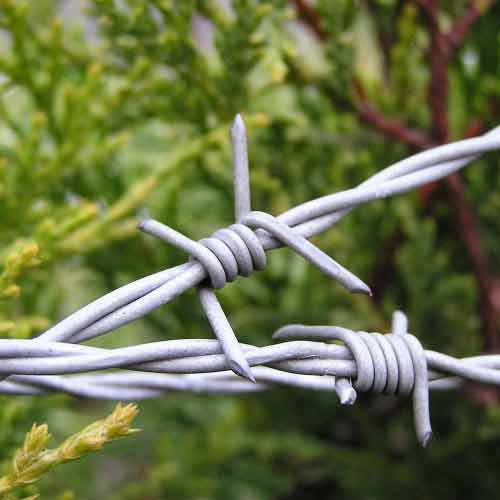
The barbs are held in place by twisting the two line wires together. The spacing between barbs (typically 4 inches or 5 inches) must be consistent. QC machines monitor the feed rate to ensure uniform spacing. The "twist" itself is critical; it must be tight enough to lock the barb in place but not so tight that it weakens the line wire. Inspectors check for "loose twists," which allow the barbs to slide along the wire, creating gaps in the deterrent. The angle of the barb is also checked to ensure it is perpendicular to the line wire for maximum effectiveness.
Galvanization and Rust Prevention
Barbed wire is almost exclusively used outdoors in harsh agricultural environments. Therefore, the zinc coating is the most important QC factor. The wire is typically Class 3 galvanized (heavy zinc). Inspectors weigh samples to determine the amount of zinc per square meter. A common test is the "dip test," where the wire is submerged in a copper sulfate solution. If the wire turns copper-colored immediately, the galvanization is insufficient. High-quality barbed wire may also have an aluminum-zinc alloy coating for even longer life in corrosive environments.
? FAQ
Q1: What is the difference between 2-point and 4-point barbed wire?
A1: 4-point wire has four sharp points at each interval, providing a stronger deterrent than 2-point wire, which has only two.
Q2: Is barbed wire safe for horses?
A2: No, barbed wire is dangerous for horses. It can cause severe lacerations. Smooth wire or wooden fences are recommended for equine fencing.
Q3: How tight should barbed wire be?
A3: It should be tight enough to pluck like a bass guitar string, but not so tight that it stretches the metal beyond its yield point.
-
2026-05-03For enclosing large areas quickly or establishing temporary perimeters, the Fence Roll offers a convenient alternative to panel-by-panel fencing. Made from interwoven wire or mesh mounted on a flexible backing, it can be unrolled along the ground and affixed to posts or stakes to form a co
-
2026-05-02A long barbed wire fence should be tensioned to a "firm" state, often described as having the tension of a bass guitar string, rather than being pulled "guitar-tight." Over-tightening is a common error that can lead to wire breakage, especially during temperature drops
-
2026-04-30Wire fence serves as a broad category of affordable, practical barriers used to define space, provide security, and contain animals. Its fundamental principle involves using strands or grids of metal wire, typically steel, to create a physical limit. This category includes everything from